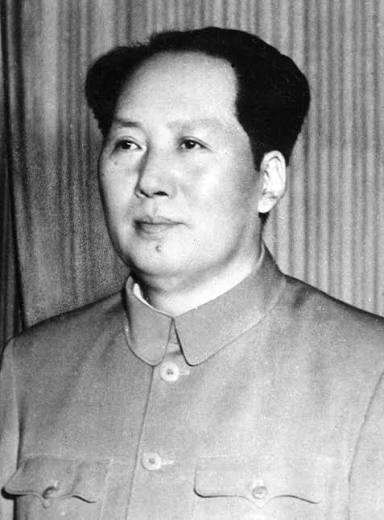
Mao died shortly after midnight in Beijing. His death was officially announced later that day, prompting a period of national mourning and a major political transition. Five decades later, his influence remains deeply embedded in China’s history, while his leadership continues to generate debate over revolution, economic transformation, political repression and human suffering.
Mao Zedong’s Cause of Death
Mao’s death followed serious heart disease and a prolonged deterioration in his physical condition. Historical and medical accounts describe significant cardiac problems, respiratory illness and other complications during his final years. A severe heart attack in early September 1976 is widely reported as a major factor preceding his death.
Mao had experienced serious health difficulties before his final illness. His history of heavy smoking, chronic respiratory problems and evidence of coronary disease contributed to concerns about his overall condition. By the mid-1970s, his physical abilities had declined substantially.
Some accounts also attribute his progressive muscle weakness and difficulty speaking and swallowing to amyotrophic lateral sclerosis, commonly known as ALS or motor neurone disease. Other sources have discussed Parkinson’s disease, but the precise diagnosis remains disputed. It is therefore important not to present every reported condition as definitively established.
His Final Days
In September 1976, Mao’s health deteriorated sharply. Accounts describe a serious cardiac episode on September 2, followed by further decline over the next several days.
Medical teams attended to the Chinese leader, whose condition had become increasingly grave. Although descriptions of his final hours differ, the established historical record places his death at 12:10 a.m. on September 9, 1976, in Beijing.
The Chinese government announced his death later that afternoon. The official statement attributed it to the worsening of his illness despite medical treatment. Detailed claims about the exact sequence of his final medical interventions vary between accounts, so allegations about particular life-support decisions should be treated cautiously unless supported by reliable documentation.
A Nation Mourns Its Founding Leader
Mao’s death triggered an extensive period of official mourning. His body lay in state at the Great Hall of the People, and a major memorial ceremony took place in Beijing on September 18, 1976.
His death also raised immediate questions about political succession. Hua Guofeng emerged as the principal successor, while tensions among senior Communist Party leaders continued. On October 6, 1976, members of the political group later known as the Gang of Four, including Mao’s wife, Jiang Qing, were arrested. Their removal helped bring the Cultural Revolution period to a close.
Mao Zedong’s Historical Legacy
Mao played a central role in the Chinese Communist revolution and the establishment of the People’s Republic of China in 1949. His government consolidated central authority, pursued land reform and promoted campaigns intended to transform Chinese society.
However, his rule also brought catastrophic consequences. The Great Leap Forward contributed to a devastating famine, while the Cultural Revolution caused widespread persecution, social disruption and political violence. Historians continue to examine both the changes associated with Mao’s government and the immense human cost of its policies.
Mao’s death did not end his political significance. His preserved body remains in a mausoleum in Beijing, and his image continues to occupy a prominent place in China’s national symbolism.
More than a historical milestone, Mao Zedong’s death marked a turning point for modern China. His legacy remains contested: he is remembered by some for revolutionary achievements and national unification, while others emphasise the suffering and repression associated with his rule.